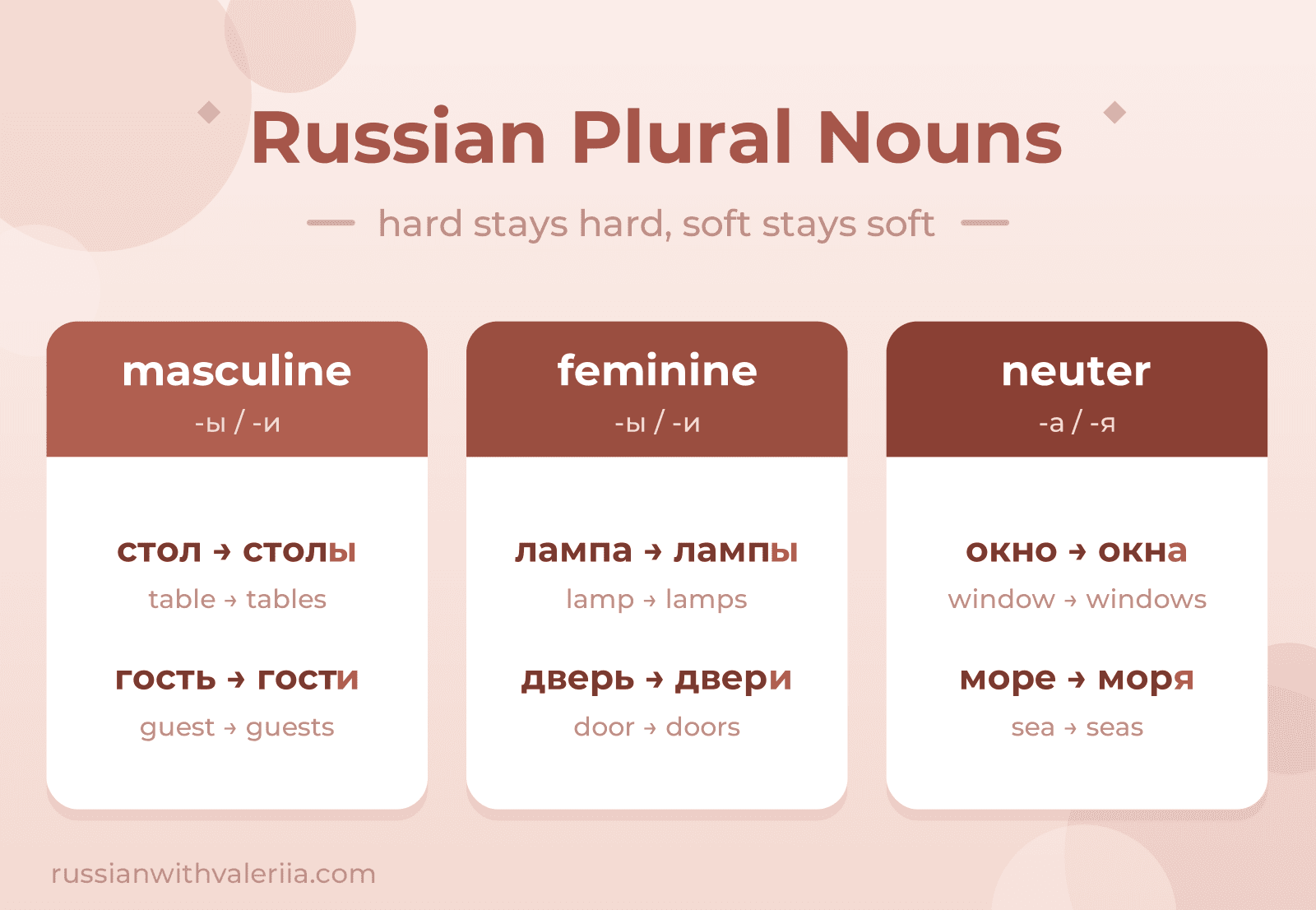
Russian Plural Nouns: How to Form Them
Russian plural endings — -ы, -и, -а and -я — how to choose between them, plus дома́, друзья́, лю́ди, де́ньги, and the nouns that have no plural at all.
Nouns
Read articleYour comprehensive resource for learning Russian. Explore grammar guides, vocabulary lessons, cultural insights, and practical tips to accelerate your language journey.
Russian plural endings — -ы, -и, -а and -я — how to choose between them, plus дома́, друзья́, лю́ди, де́ньги, and the nouns that have no plural at all.
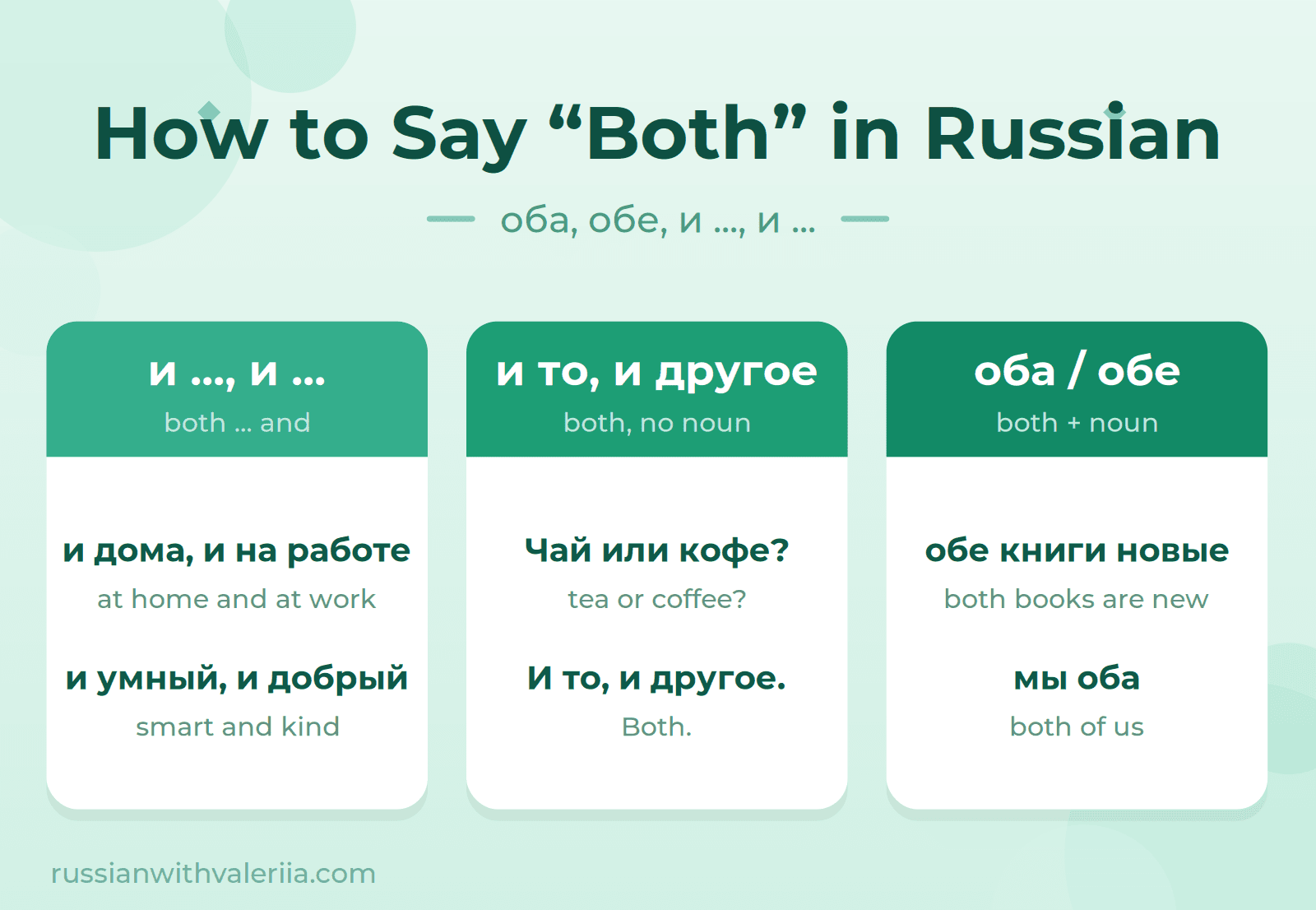
Both in Russian is not always оба. Learn when to use оба and обе, when you need и ..., и ..., and how to say neither.
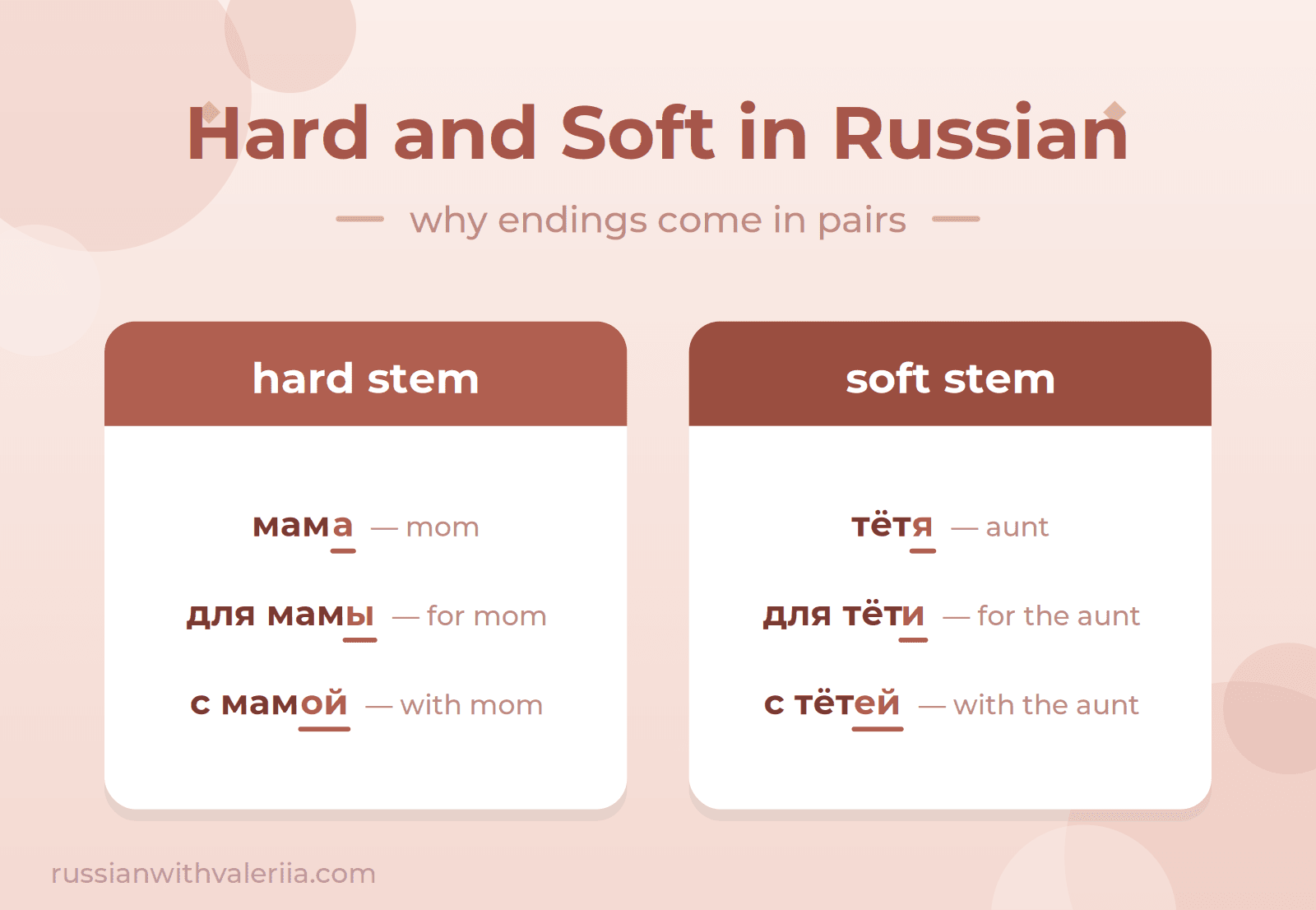
Ten vowel letters, five sounds. Learn how hard and soft stems work, why every Russian ending has two spellings, and the spelling rules that follow.
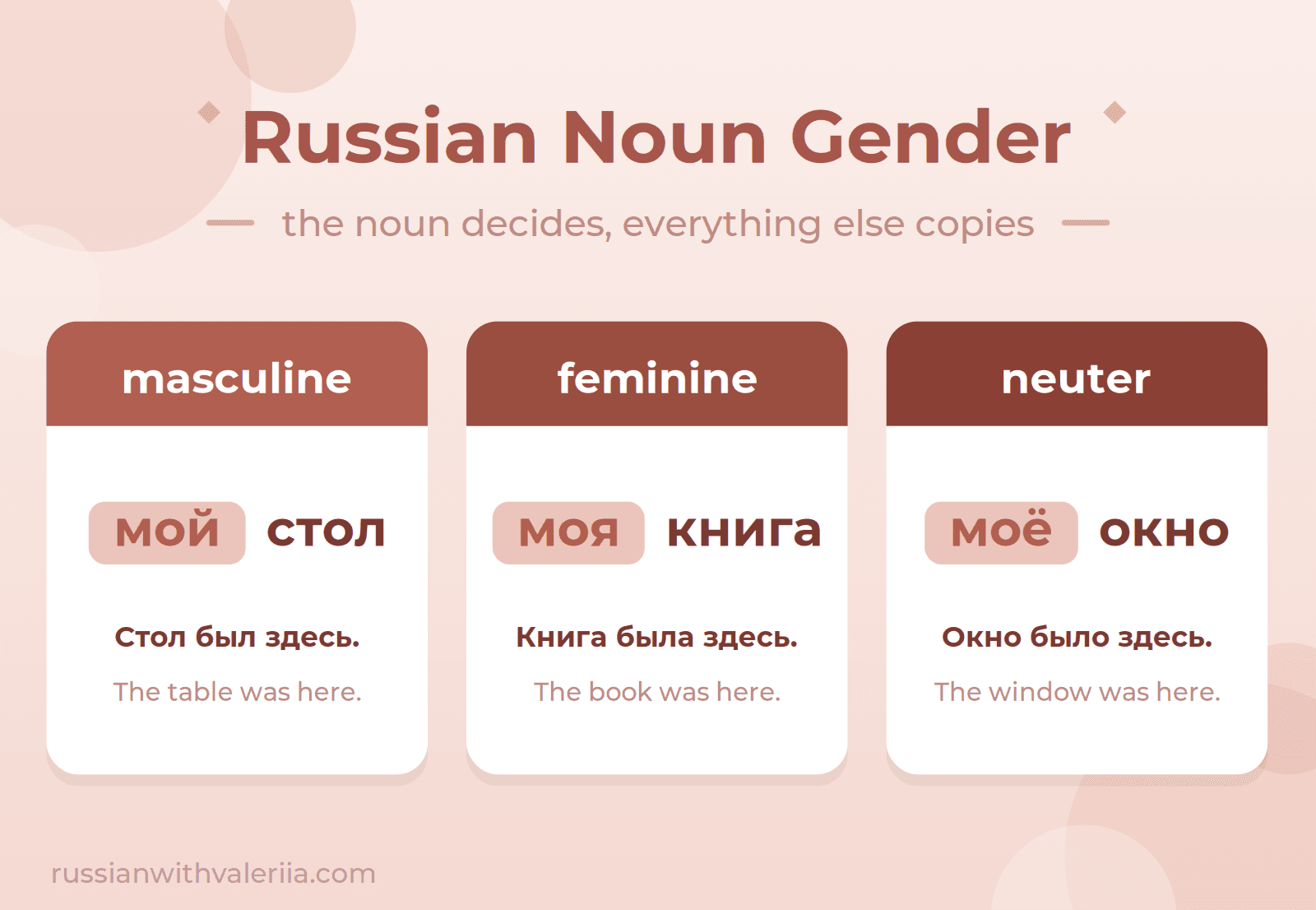
Gender decides how everything around a noun behaves. How to read it off the ending, and what to do when the ending doesn't tell the truth.
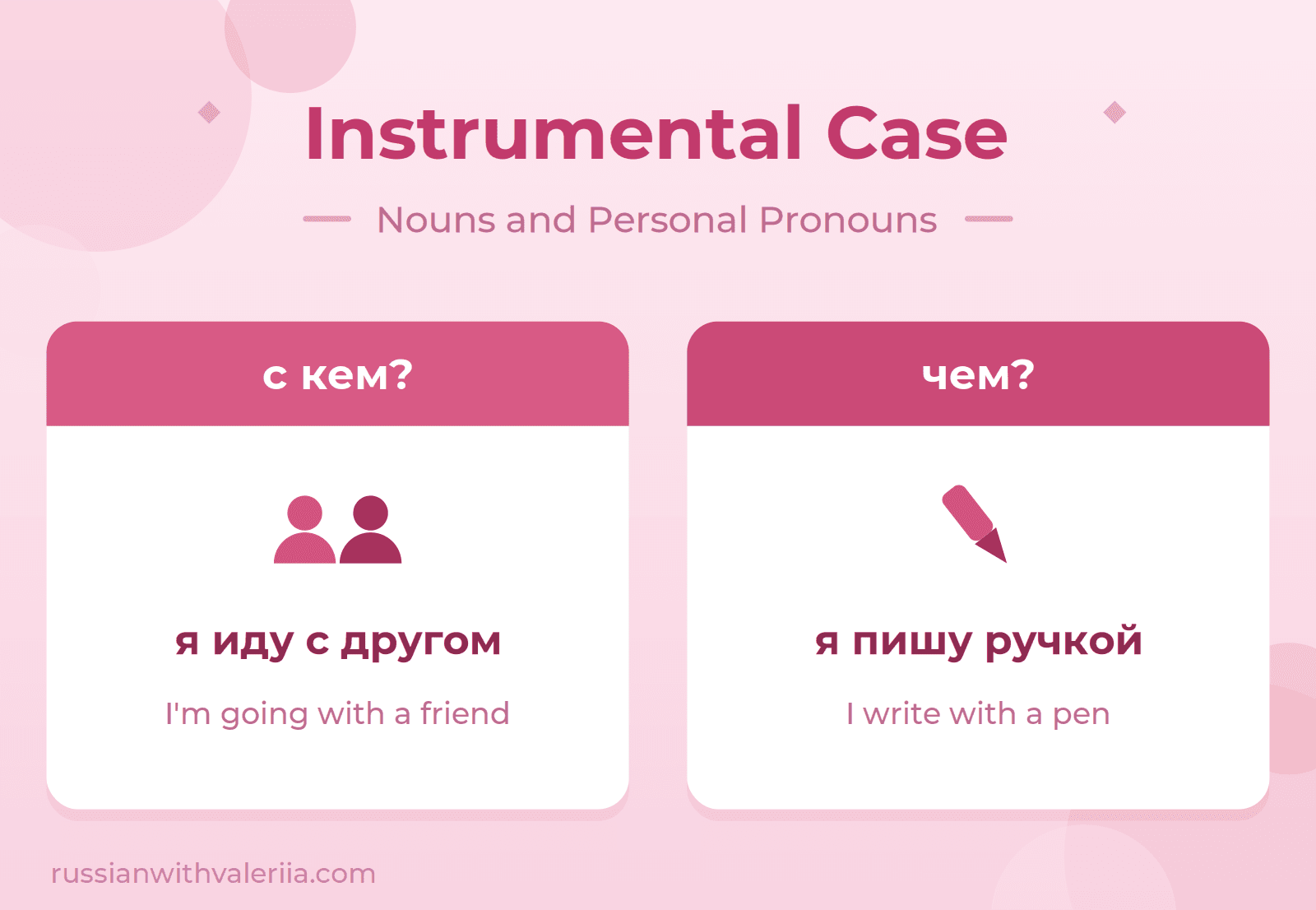
The case behind со мной, ко́фе с молоко́м and писа́ть ру́чкой. When Russian needs с, when it doesn't, and every ending for nouns and personal pronouns.
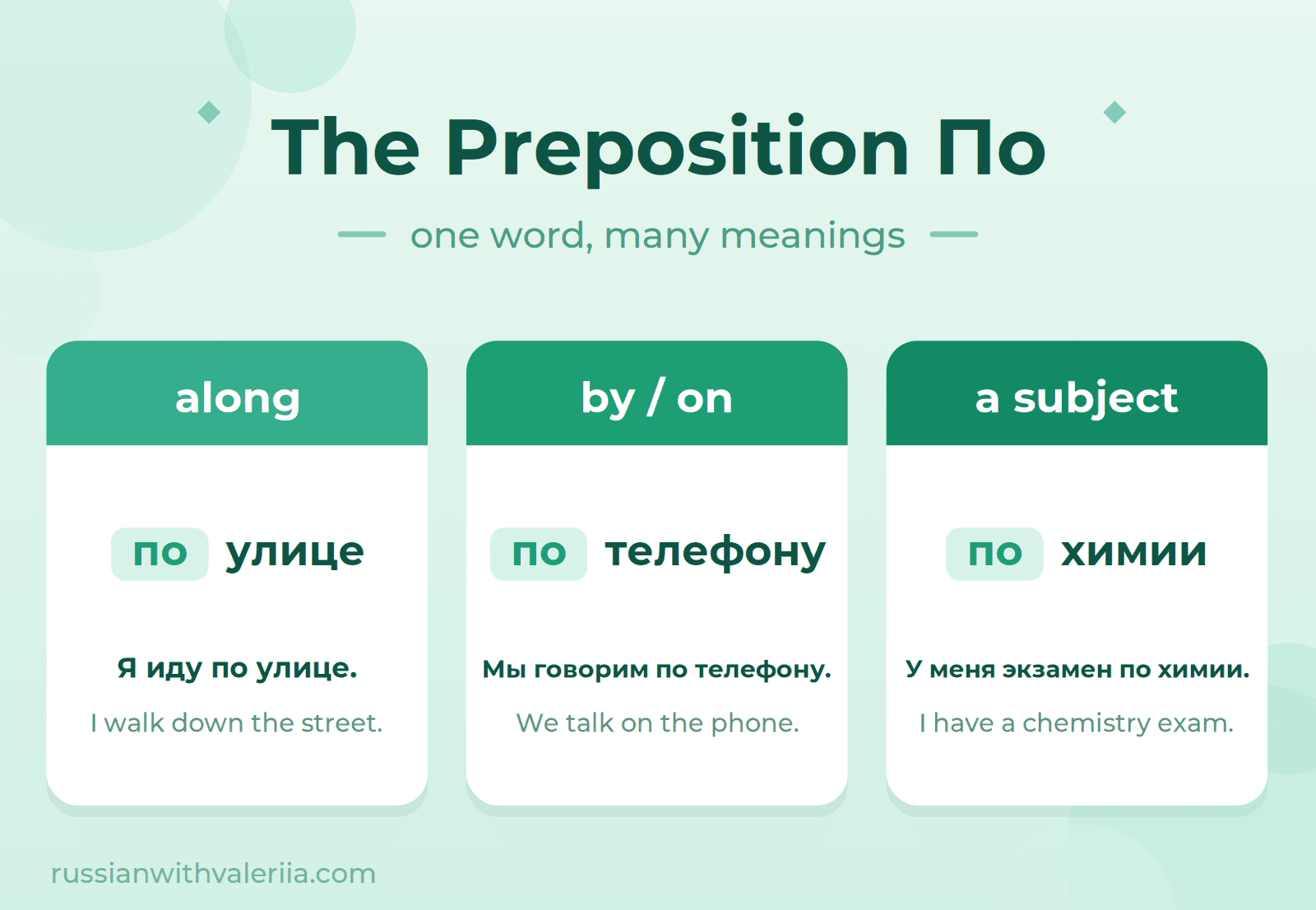
The Russian word по seems to mean something new every time — along the street, by phone, on Mondays, according to plan. Here's every use, with clear examples.
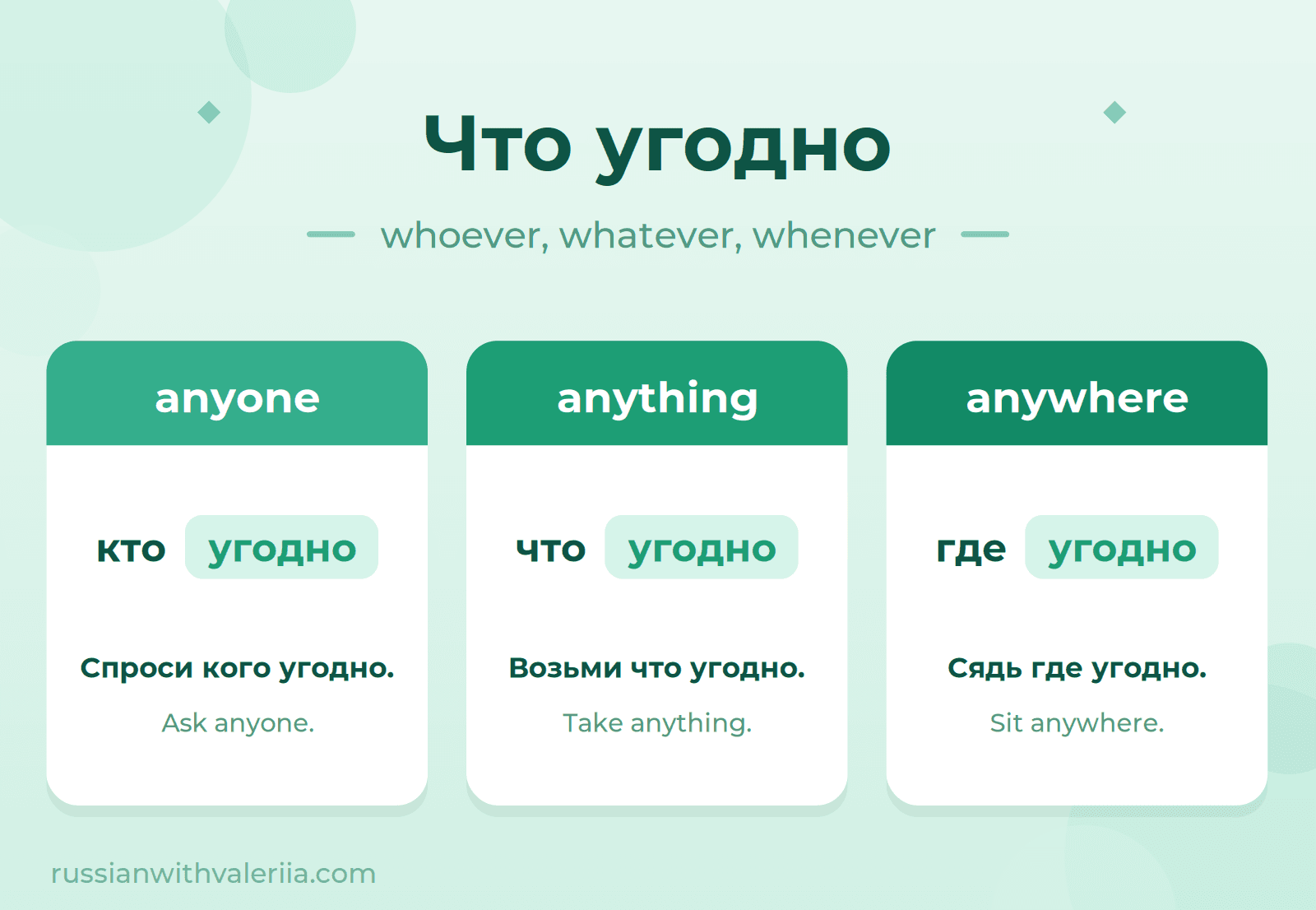
Meet угодно — the Russian word for anything at all, with zero limits, and how it beats -нибудь.
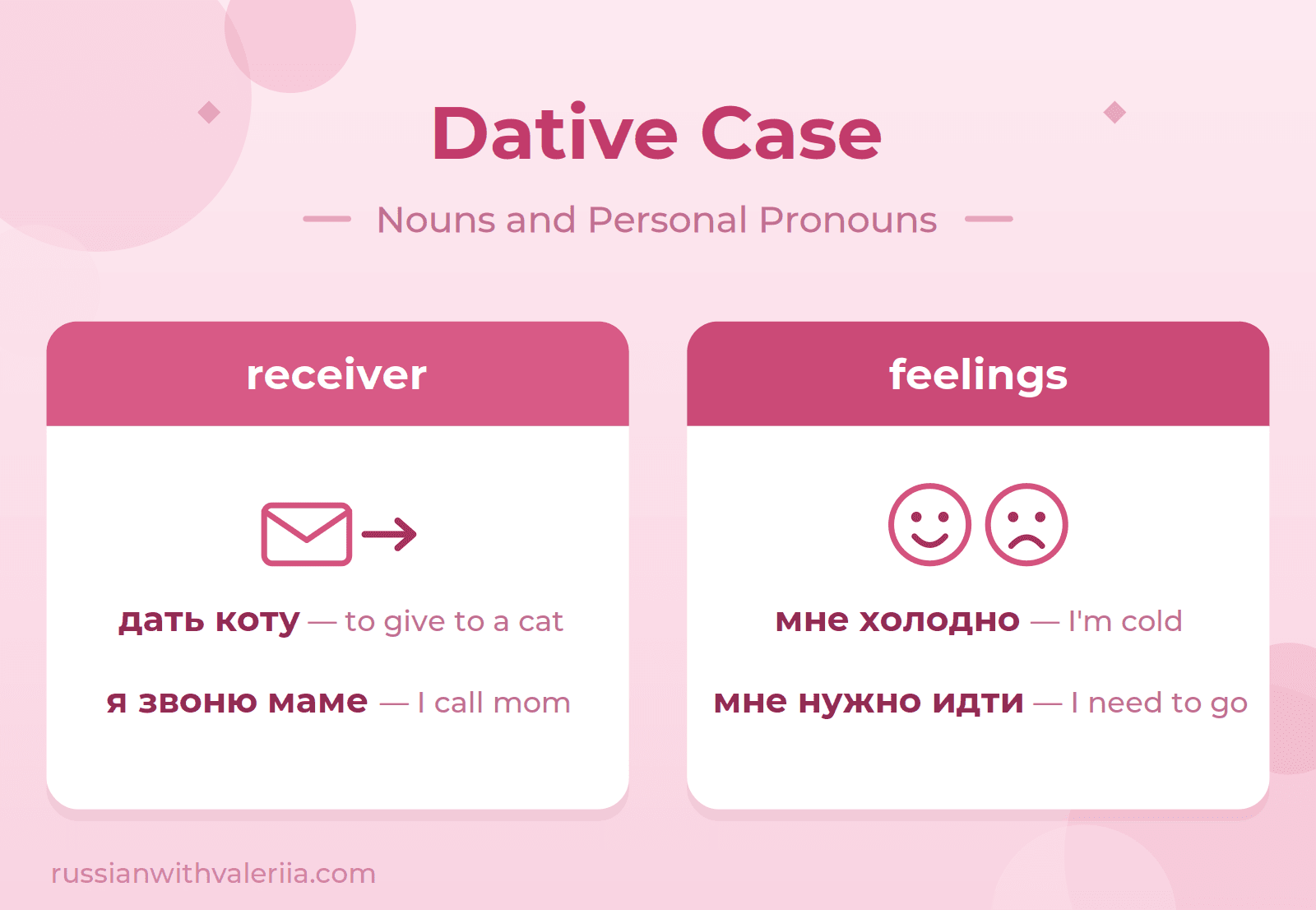
Learn the Russian dative case step by step — verbs that take it, noun and pronoun endings, мне нравится, мне нужно, age, and the preposition к, all with exercises.
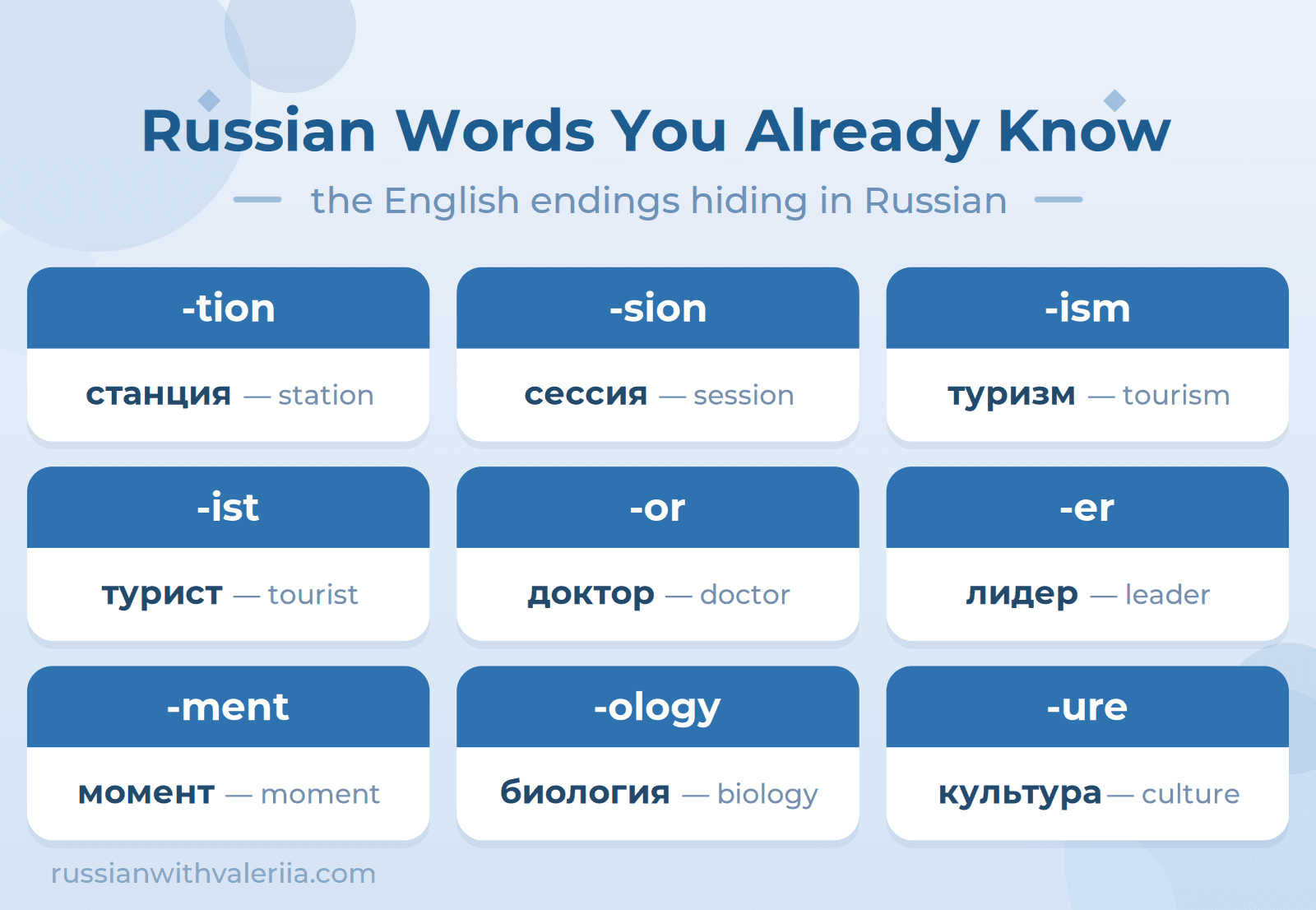
Thousands of Russian words share endings with English — -tion, -ism, -ist, and more. Learn the patterns and start recognizing Russian vocabulary today.
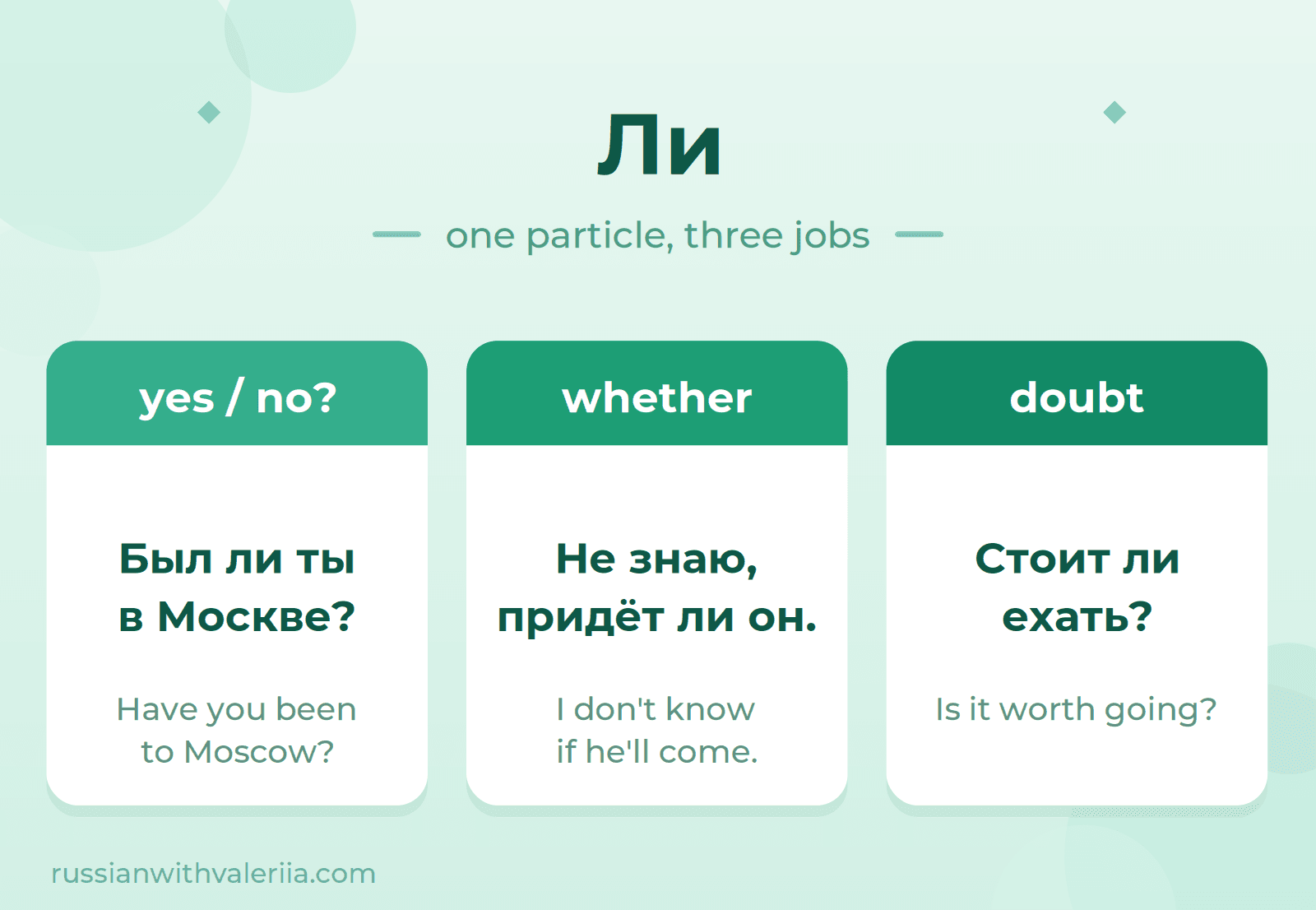
The Russian particle ли turns any statement into a yes/no question. Learn to ask questions, say "whether," and stop confusing ли and если — with simple examples and exercises.
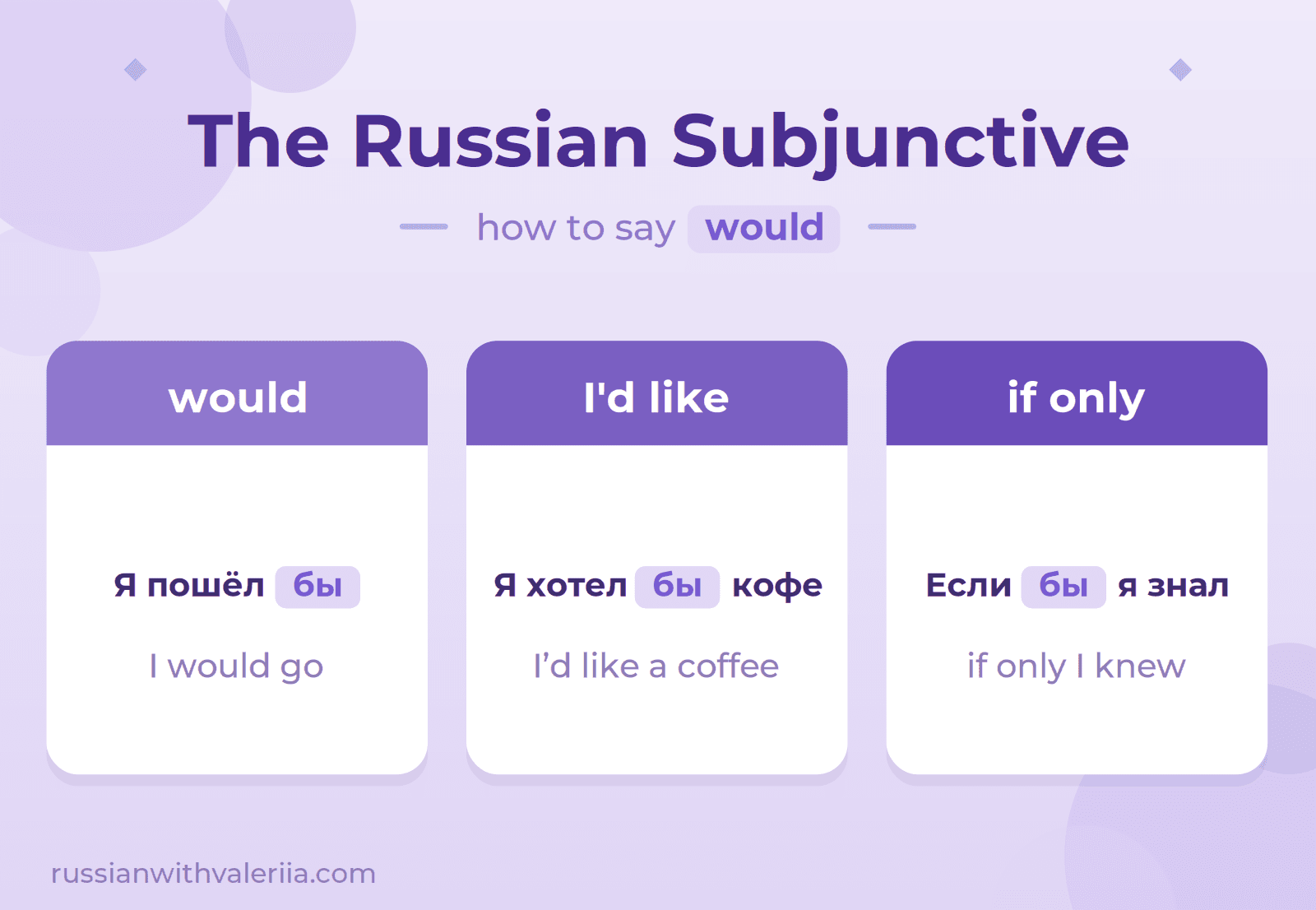
The Russian subjunctive has no special form — just past tense + бы. Learn to say "would," "I'd like," and "if only," with clear examples and exercises.
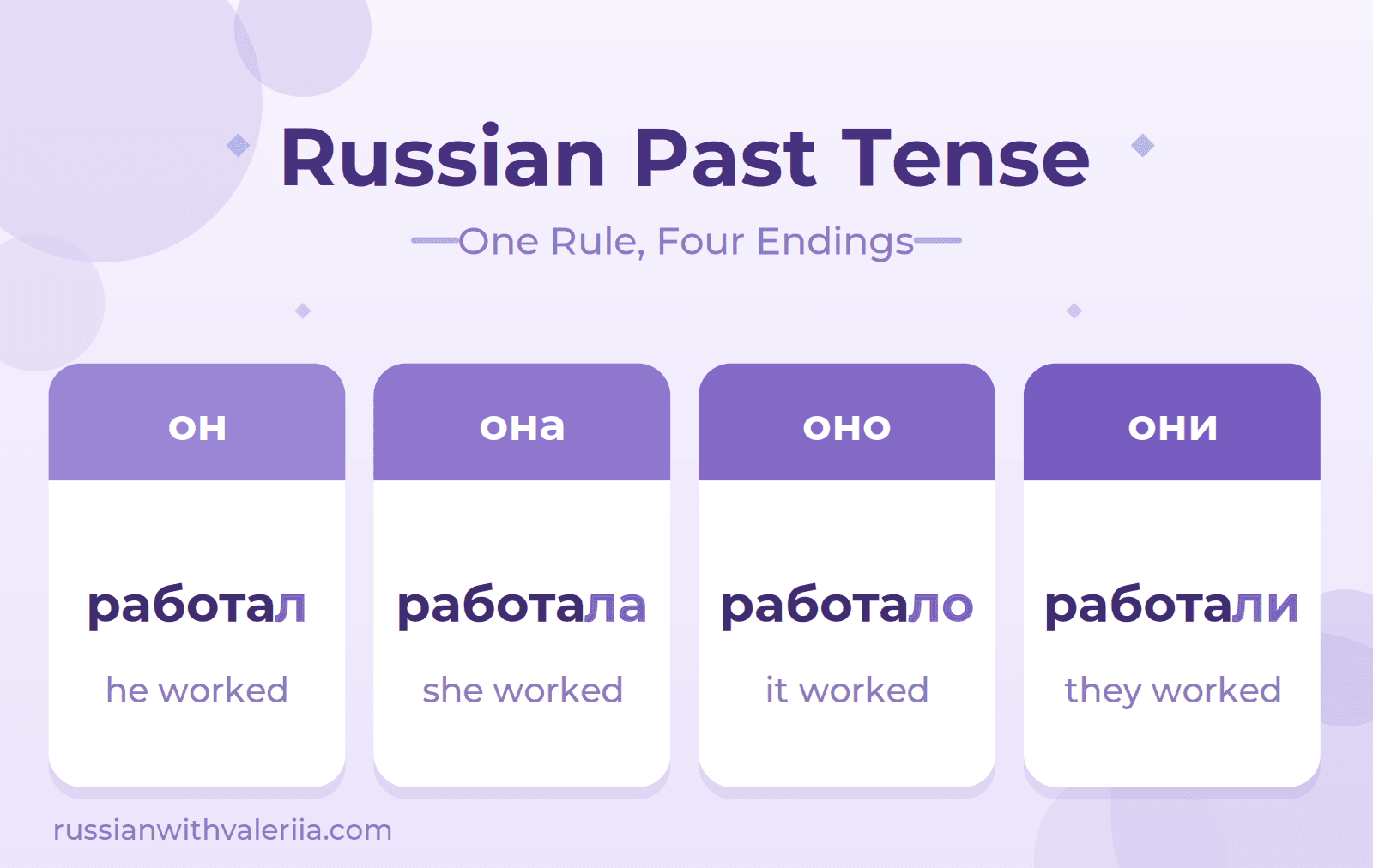
Learn the Russian past tense the easy way: one rule, four endings, был/была and the few irregulars. Clear examples, common mistakes, and exercises with answers.
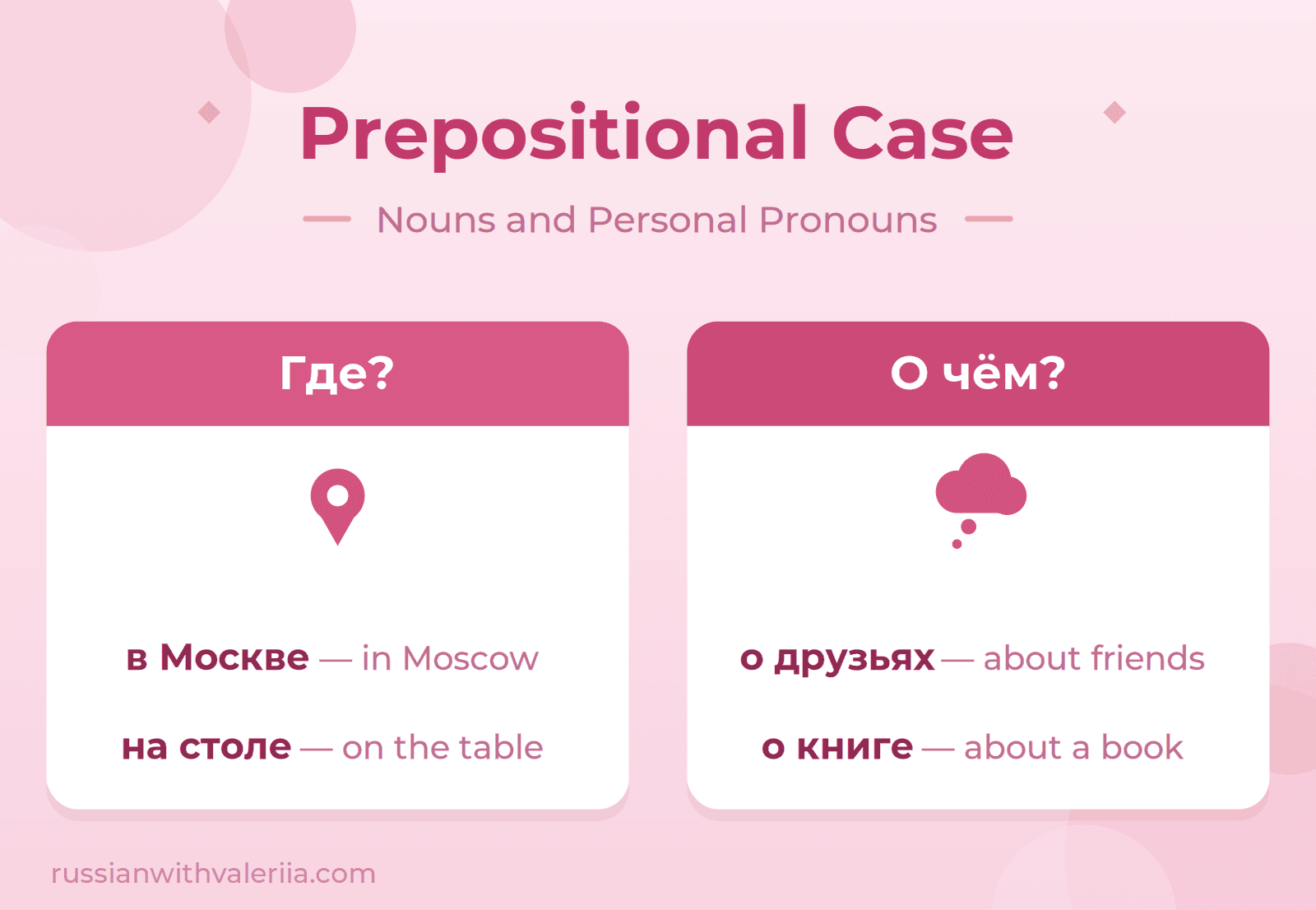
The Russian prepositional case is the easiest one to learn — usually you just add -е. See when to use в, на and о, with clear examples and free exercises.